Case Study: Uplift Modeling for CRM Optimization
In retail and e-commerce, usually customer loyalty is of prime importance. This is often quantified through metrics like lifetime value (LTV), retention rates, and churn probability.
Traditional approaches rely on predictive modeling — such as logistic regression or tree-based classifiers (e.g., XGBoost) — to identify churn segments by analyzing features like recency, frequency, monetary value (RFM), and behavioral signals from transactional data. However, trying to re-engage these late-stage at-risk customers can yield diminishing returns, as their propensity to churn is already high, leading to low conversion rates and inefficient resource use.
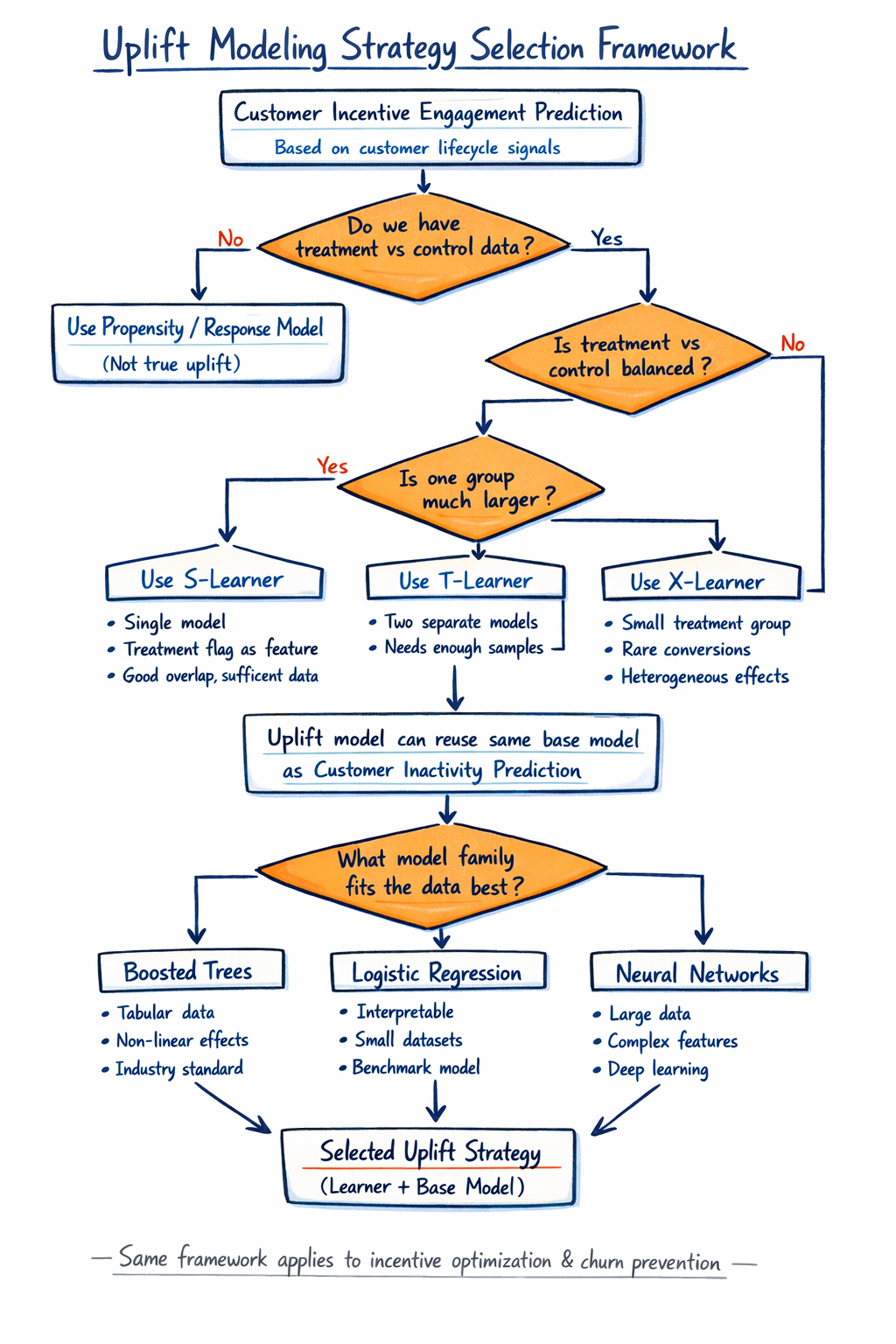
A more effective strategy could be to shift to a more personalised early-intervention approach. From a data science perspective - by leveraging causal inference techniques like uplift modeling - businesses can estimate individual treatment effects of personalized incentives — such as targeted discounts or recommendations - optimizing for incremental lift. This can help steer business strategy from “high-risk” customers to targeting “high-value” customers to improve overall customer experience and long term retention.